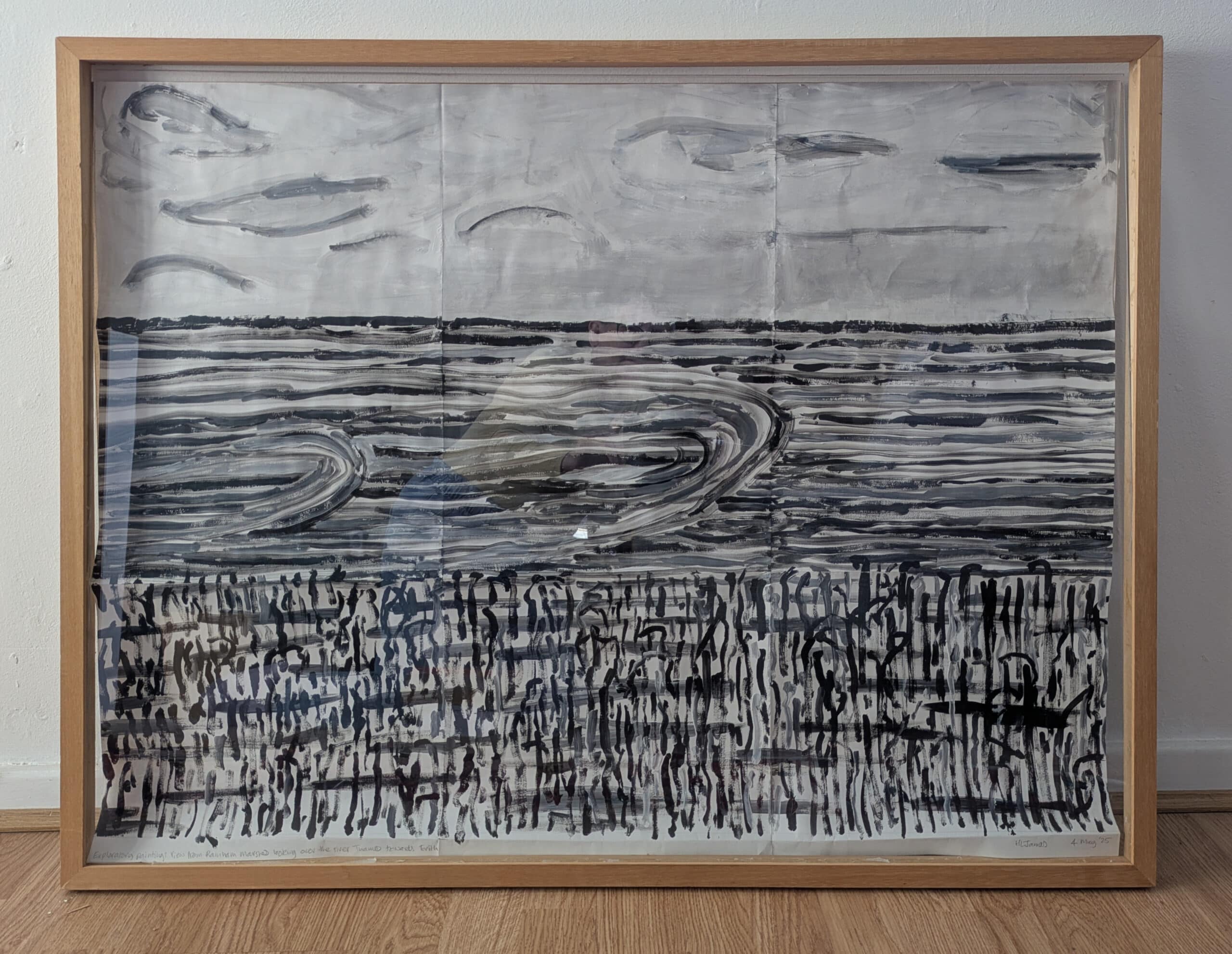
A common question we’re asked at our framing shop in East London is whether an artwork needs a mount, or whether it’s better framed edge-to-edge.
In truth, there’s no single right or wrong choice. The best option depends on the artwork itself, how it’s displayed, and the overall look you want to achieve.
To help you decide, let’s look at what mounting actually does, when edge-to-edge framing works best, and how each option affects the finished piece.
What is a picture mount and why is it used?
A mount (also known as a mat) is the board that sits between the artwork and the frame. It creates a visual border around the piece and physically separates the artwork from the glass.
Mounts serve three key purposes:
- Visual breathing space – A mount gives the artwork room to “sit,” helping the eye focus on the image rather than the frame.
- Protection – By keeping the artwork away from the glass, a mount reduces the risk of condensation, sticking, and long-term damage.
- Scale and balance – A well-sized mount can make a smaller artwork feel more substantial within a larger frame.
This is why mounts are commonly used for photography, prints, drawings, and any work where you want a classic, balanced presentation.
When does a window mount make sense?
A window mount is the most traditional option, where a cut-out window reveals the artwork underneath.
This works particularly well when:
- The artwork is smaller than the frame and needs visual presence
- You want a timeless or gallery-style look
- The artwork has uneven or deckled edges you’d prefer to hide
- You’re framing photographs or limited-edition prints
Mount colour and size matter here. A wide mount can feel calm and considered, while a narrow mount keeps things modern. Neutral tones are popular, but a subtle off-white, warm grey, or soft colour can elevate the piece without competing with it.
What does “edge-to-edge” (flat) framing mean?
Edge-to-edge framing, sometimes called flat framing, means the artwork fills the entire visible area of the frame, with no mount at all.
Rather than pressing the artwork against the glass, it’s mounted onto a conservation backing board, with spacers used to keep it safely away from the glazing.
This approach suits:
- Posters and prints with built-in borders
- Contemporary artwork where the image runs to the edge
- Graphic or typographic pieces
- Clean, minimalist interiors
Edge-to-edge framing feels modern and direct. There’s nothing interrupting the artwork, which can be especially effective for bold imagery or strong compositions.
What is float mounting?
If you’re torn between showing the full artwork and adding visual separation, float mounting is a strong middle ground.
With a float mount, the artwork appears to “float” slightly above the backing board, with a small shadow gap all the way around. The edges of the artwork are fully visible, making this a popular choice for:
- Prints with deckled or hand-torn edges
- Contemporary art and illustration
- Pieces where the paper itself is part of the aesthetic
Float mounting still uses spacers to protect the artwork from the glass, combining visual impact with proper conservation.
How does protection factor into the framing decision?
From a framing perspective, protection is just as important as appearance.
Mounts naturally create space between the artwork and the glass, which is ideal for long-term care. Edge-to-edge framing can be just as safe when done correctly, as long as spacers and conservation-grade materials are used.
For more valuable or irreplaceable pieces, we’ll usually advise either a window mount or float mount, paired with UV-protective glass. For posters or decorative pieces, edge-to-edge framing is often perfectly suitable.
If you’re unsure, it’s always worth getting advice, especially before choosing press mounting, which isn’t reversible and isn’t recommended for valuable work.
How do style and space influence the choice of frame and mount?
Think about where the artwork will live.
- Minimal, modern interiors often suit edge-to-edge or float framing
- Traditional or mixed interiors tend to work well with window mounts
- Large walls benefit from mounts that add scale and presence
- Smaller spaces can feel cleaner without a mount
There’s also the frame itself to consider. Slim frames pair beautifully with edge-to-edge artwork, while deeper box or square profiles often benefit from a mount to balance the depth.
Which style of mount should you choose?
If you want a simple rule of thumb:
- Choose a mount when you want protection, balance, and a timeless look
- Choose edge-to-edge when the artwork is bold, contemporary, or already has a border
- Choose a float mount when the edges of the artwork deserve to be seen
Ultimately, the best framing choice enhances the artwork without drawing attention to itself.
If you’re still unsure, our easy online quote form lets you explore different options quickly, and if what you’re after isn’t listed, just get in touch. We’re always happy to advise and can tailor the framing around your artwork, your space, and your budget.