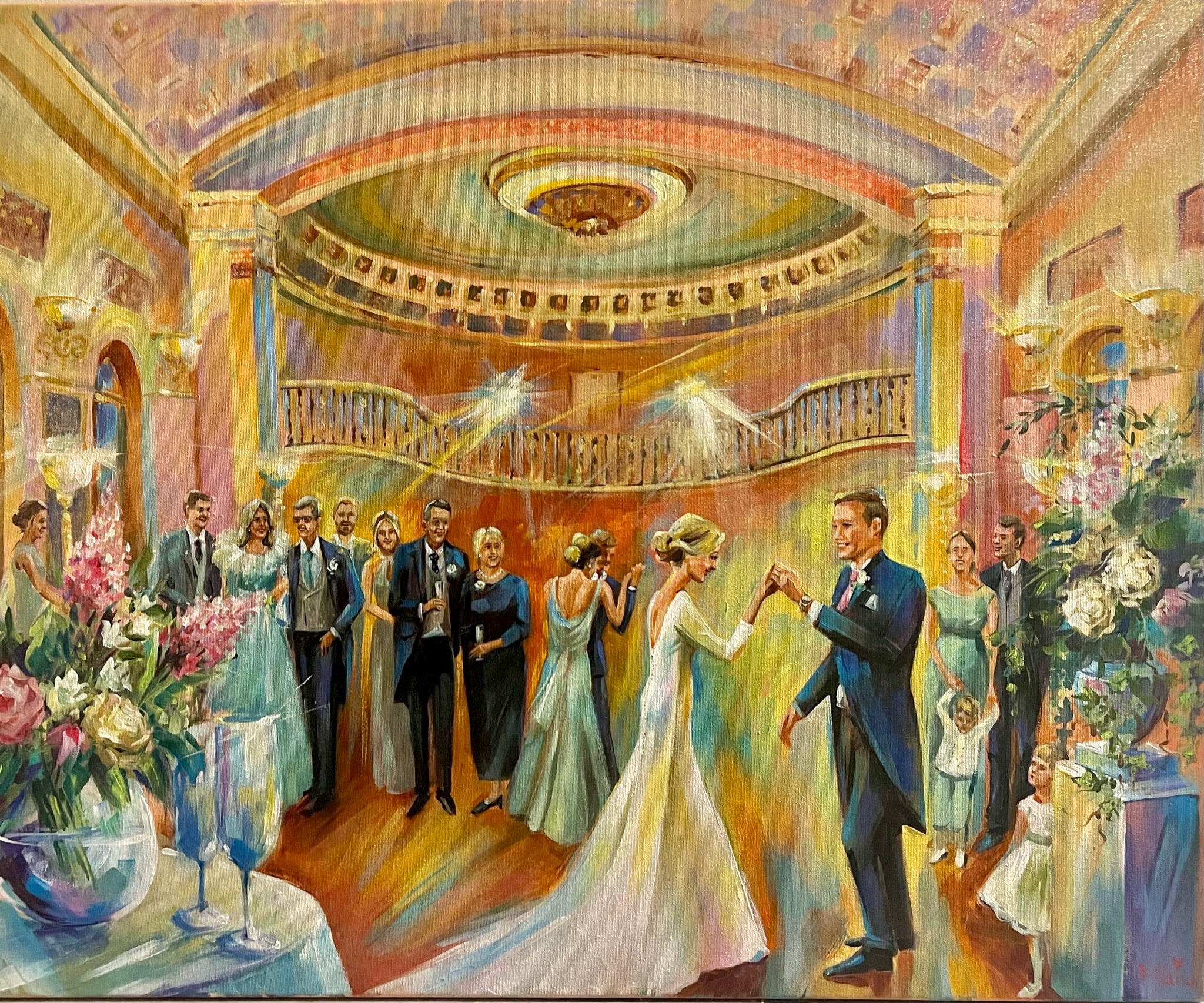
London is one of the three historic centres of the art world (alongside New York and Paris), and this has allowed the city to nurture young artists of all disciplines to thrive, find a following and begin their journey through the creative arts.
We are a part of this by providing vital bespoke framing services that allow artists and art collectors to beautifully store art of all shapes and sizes in a way that not only protects but also enhances.
This is part of the grand ecosystem that allows not only artists’ works and artists, be they painters, photographers, sculptors or filmmakers, to exhibit and present their ideas.
Alongside art supply shops, galleries and the wonderful people who live and visit the capital every single day, art lives in London, and whilst this has been the case for centuries, one of the first sparks of the modern art world could be felt with the evolution of the New Scene.
Less a specific art movement and more a turning point for art itself in London, the New Scene was the evolution of art throughout the Swinging Sixties, a decade that continues to define and shape the city and its artists to this day.
How Did Pop Goes The Easel Change London Art?
As with most decades, the Swinging Sixties and the New Scene were fashionably late to the scene.
The start of the evolution of London art in the 1960s began in 1962 with the broadcast of the Ken Russell documentary Pop Goes The Easel on the BBC.
The pop art movement had existed for nearly a decade at this point and had its roots in scenes such as modernist collage and dadaism, but it was the 1960s when the interconnection of art and mass culture began to have a significant cultural effect.
Pop Goes The Easel was filmed and shown at that exact intersection, where artists such as Pauline Boty, Peter Phillips, Derek Boshier and Peter Blake showcased their unique perspectives on art right at the point where British pop culture is about to dominate global art.
How Did The British Invasion Affect London’s Art Scene
Pop Goes The Easel was initially broadcast on 25th March 1962. Seven months later, on 5th October, the Beatles released their first single and changed both art and pop culture forever.
What became known as the British Invasion radically revolutionised American culture, ironically through the reflection of how quintessentially Americana-tinged cultural exports, such as rock and roll music, Hollywood, hamburgers, and the spirit of rebellion which birthed the counterculture movement, affected the rest of the world.
The British Invasion turned London from a rebuilding relic of a pre-WWII world into the centrepoint of culture, with everything getting brighter, bolder and “hipper”, including the art.
Because the driving forces were pop art, pop music and pop culture, art was no longer purely the pursuit of an aristocratic upper class, but instead was enjoyed by and spoke to everyone.
Which London Exhibition Affected The Future Of Art Most?
This change in pop culture affected the types of art showcased in London and both the people who took to the stage and those who paid attention.
There were a lot of impactful shows in the art world throughout the 1960s, but the crucial element was that the art was not only new but took a very different approach to the relationship between art, artist, culture and observer.
Possibly the most impactful of this, and the zenith of the New Scene in a lot of ways, is the 1969 London exhibition Live In Your Head: When Attitudes Become Form.
A presentation of a show originally displayed in Bern, Switzerland, When Attitudes Became Form was a pivotal point in the art world, as it was perhaps the most prominent and impactful showcase of conceptual art, and fundamentally changed how many artists and art critics approached art as a whole.
Rather than establishing a distance between art and life, the process of change, age and flux was part of art, as was the process of creation itself.
Whilst its impact was perhaps most directly seen in London thanks to the work of the Young British Artists, the London edition of When Attitudes Became Form has permeated into every gallery and showcase of art and photography made from the 1970s onwards.
Why Does London Continue To Be The Centre Of New Art?
- Its established place within the art community enables it to nurture young, unique artists.
- The history of welcoming and celebrating new, challenging and even transgressive art encourages greater evolutions of the form.
- The ecosystem exists from specialist art supply shops, to framers, galleries, auctions and everything in between.
- London is one of the most uniquely diverse cities in the world, which encourages a broad exploration of artistic and cultural ideas.