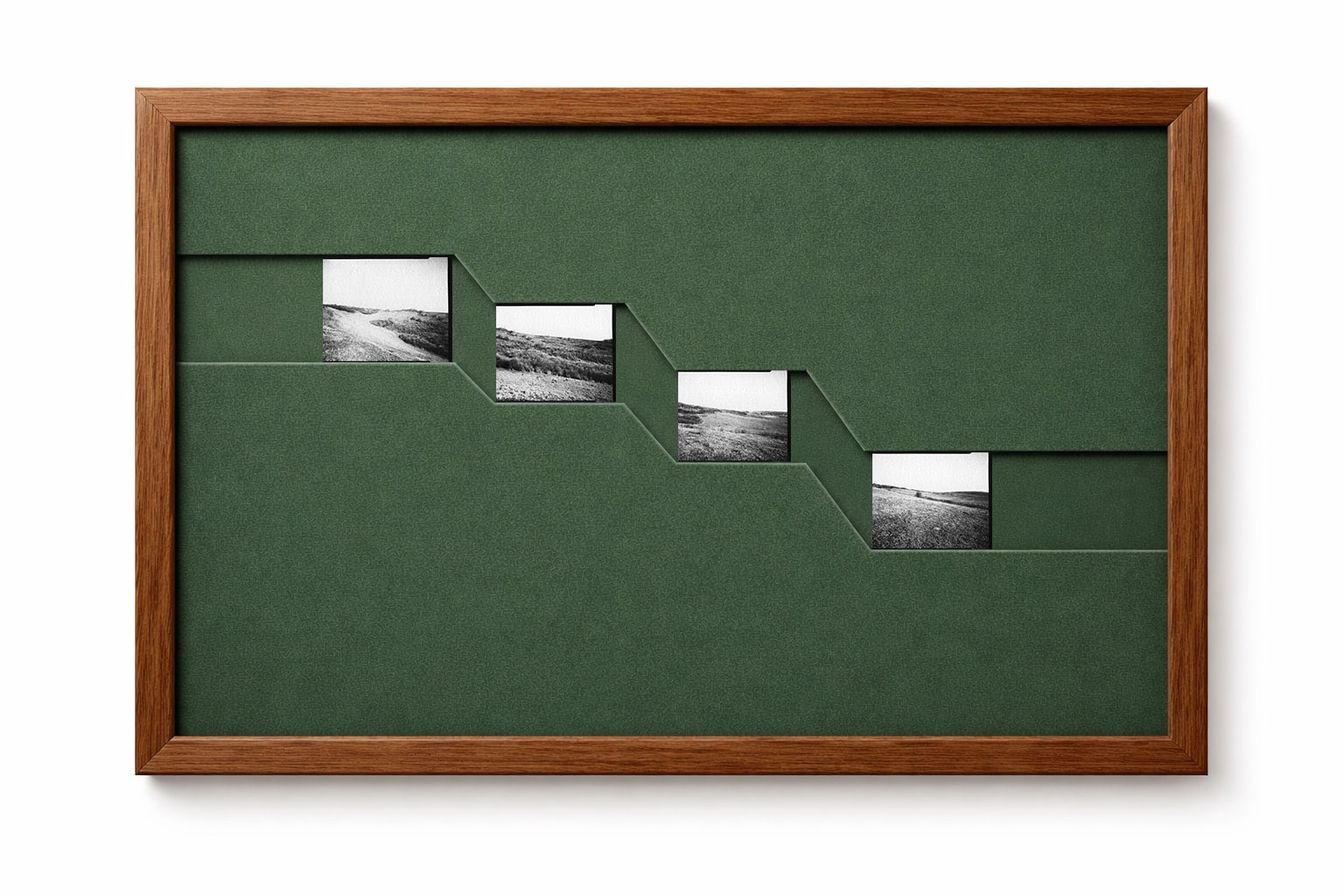
When presenting a body of work, whether for an exhibition, open call or online portfolio, framing becomes part of the overall narrative. Artists are sometimes unsure whether to use the same frame style across every piece, or to vary it depending on the artwork.
There’s no strict rule, but there is a clear principle: consistency usually strengthens a series. The challenge is knowing when to keep everything uniform and when variation might actually work in your favour.
Why does consistency matter in a series of framed artworks?
When multiple artworks are shown together, they’re rarely viewed in isolation. The eye moves between pieces, comparing scale, colour and composition. Inconsistent framing can interrupt that flow.
Using the same frame style helps:
- Create a cohesive, professional presentation
- Reduce visual distractions
- Allow the artwork to feel like part of a unified body
- Make installation and spacing more straightforward
In gallery settings, consistency also helps your work sit comfortably alongside other artists’ pieces without clashing.
Does using the same frame make artwork look repetitive?
Not if the work itself has enough variation. A consistent frame acts as a visual anchor. It provides structure, allowing differences within the artwork such as colour, subject, and texture to stand out more clearly.
Think of the frame as a container. If every container is the same, the focus naturally shifts to what’s inside.
Where repetition can become an issue is when both the artwork and the framing are highly uniform. In that case, introducing subtle variation, such as adjusting mount sizes, can help create balance without losing cohesion.
What frame styles work best for series?
Simple, neutral frames are usually the safest and most effective choice.
Slim profiles in black, white or natural wood tend to:
- Work across a wide range of artwork styles
- Photograph well for portfolios and submissions
- Feel current and gallery-appropriate
Matt finishes are generally preferred, as they reduce glare and keep the presentation understated. The goal is not to make the frame invisible, but to ensure it doesn’t compete with the work.
Should mounts be consistent as well?
Yes, ideally. If you’re using window mounts, keeping them consistent in colour and proportion helps maintain a clean, professional look across the series.
That said, mount size can be adjusted slightly depending on the artwork. For example, smaller pieces may benefit from wider mounts to give them more presence, while larger works can use narrower proportions.
The key is to keep the overall approach aligned, even if minor adjustments are made.
When is it okay to vary frame styles?
There are situations where variation can work, but it needs to feel well thought through rather than haphazard.
You might consider mixing frame styles if:
- The series spans different mediums (e.g. photography and painting)
- The concept behind the work supports variation
- You’re presenting pieces individually rather than as a tight group
Even then, it’s best to limit variation. For example, you might use the same frame profile in different finishes, or the same colour across slightly different sizes. Random or inconsistent framing, without a clear reason, can make the work feel less resolved.
Does consistency matter for online portfolios?
Yes; arguably even more so. Online, viewers scroll quickly. A consistent framing style helps your portfolio feel curated and professional at a glance.
It also improves:
- Visual cohesion across thumbnails
- Brand identity on platforms like Instagram
- Buyer confidence when viewing multiple pieces
If you’re selling work online, consistent framing can make your listings feel more polished and trustworthy.
How does framing affect exhibition selection?
While framing alone won’t determine whether your work is selected, it does influence first impressions. Curators often review many submissions in a short time. Clean, consistent presentation suggests professionalism and attention to detail.
Inconsistent or overly decorative framing can distract from the work and make it harder to assess as part of a series. If submission guidelines specify framing requirements, always follow them. If not, a restrained and consistent approach is usually the safest route.
The balanced approach
For most artists, using the same frame style across a series is the best choice. It creates cohesion, supports the artwork and presents your work in a clear, professional way.
That doesn’t mean everything has to be identical. Small adjustments in mount size or proportion can help tailor the presentation without breaking consistency.
If you’d like some friendly, professional guidance on how to effectively frame your artwork, whether a series or single piece, drop into our framing shop in Lower Clapton and we’ll be delighted to help you.