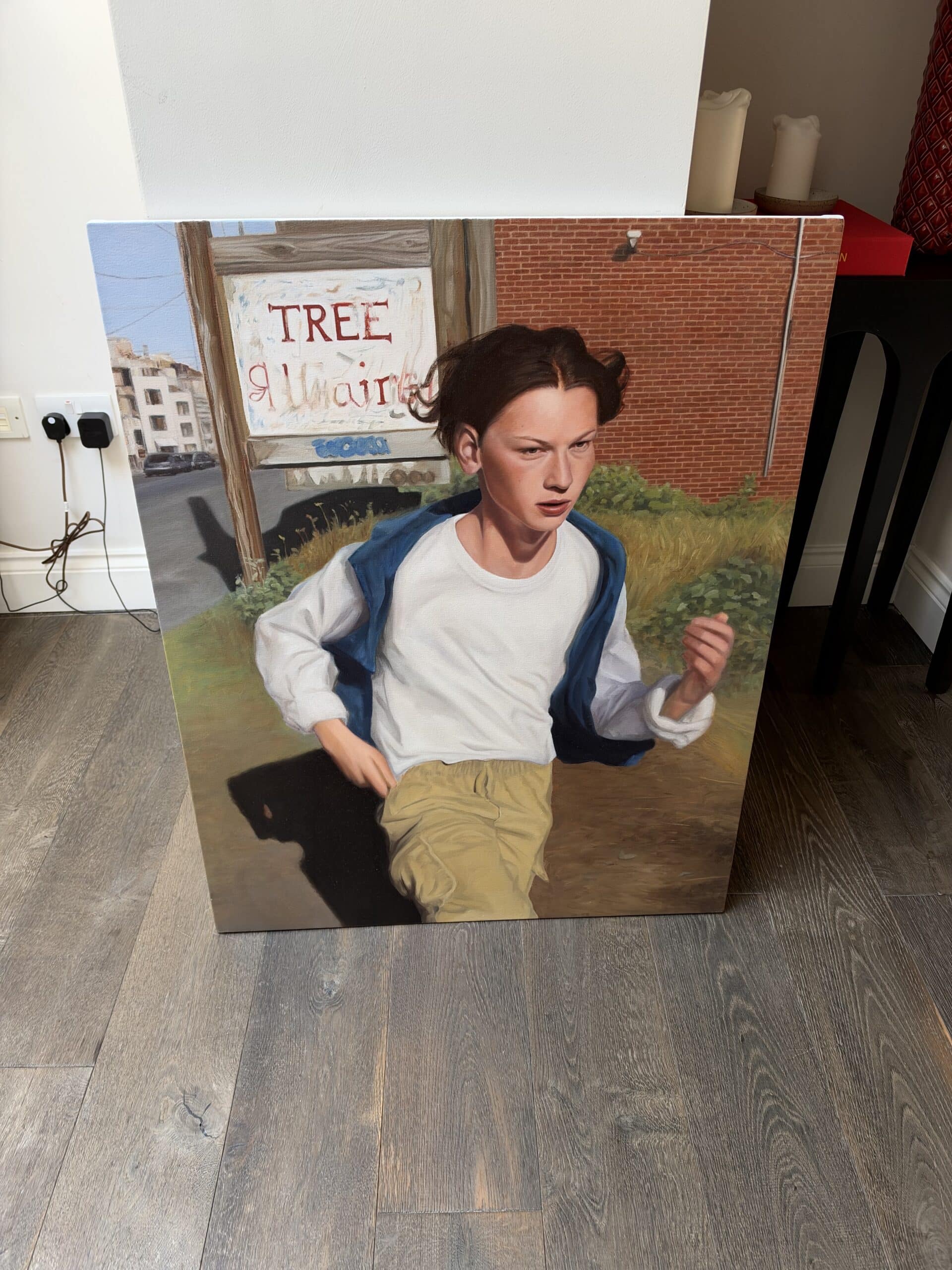
An oversized artwork can transform a room. Whether it is a large abstract painting, a photographic print or a striking piece of contemporary art, a substantial work can create a focal point and give an interior a distinctive character.
However, framing a large piece involves more than choosing a frame that looks good. Weight, structural support, glazing, transportation and the proportions of the finished piece all need careful consideration.
If you are planning to frame an oversized artwork, here are the main factors to discuss with a professional framer.
1. How will the artwork fit into the space?
Before choosing a frame, consider where the finished artwork will be displayed. A large piece can look impressive above a sofa, across a dining room wall or in a spacious hallway, but its proportions need to work with the surrounding architecture and furniture.
Measure the available wall space and consider how much room the artwork will occupy once the frame and any mount have been added.
It is also worth thinking about viewing distance. A large, detailed image may need sufficient space for viewers to appreciate it, while a bold abstract work might make an impact from across the room.
If you are choosing artwork for a smaller London property, such as a converted apartment or Victorian terrace, consider how the piece will relate to doorways, windows, fireplaces and other architectural features.
2. Choose a frame that complements the artwork
A frame can significantly influence the appearance of an oversized piece. A slim frame can give contemporary artwork a clean, understated finish, while a wider frame may provide a stronger visual border.
Natural wood can introduce warmth, whereas black or metallic finishes can create a more defined, modern look.
The artwork itself should guide the decision. A colourful abstract painting might benefit from a restrained frame, while a monochrome photograph could work well with a carefully chosen mount and a simple frame.
Proportion matters, too. A frame that looks balanced on a small print may appear too delicate around a large artwork. Equally, an unnecessarily heavy frame can overwhelm the image.
3. Consider the weight and structural support
One of the most important considerations when framing oversized artwork is weight. Large frames can become surprisingly heavy, particularly when they incorporate substantial timber, glass or rigid backing materials.
The artwork itself may also require additional support, depending on its medium and construction.
The frame must be strong enough to support the finished piece without bending, twisting or placing excessive pressure on the artwork. Appropriate fixings and hanging hardware are equally important.
The type of wall also matters. Plasterboard, masonry and stud walls have different requirements, so the hanging method should be suitable for both the finished weight and the wall structure.
For particularly large or heavy pieces, professional advice can help establish whether specialist mounting or installation is needed.
4. Should you use glass or acrylic glazing?
Glazing is an important decision when framing large prints, photographs, drawings and other works on paper. Traditional glass offers good clarity, but its weight can become an issue as frame dimensions increase.
Acrylic glazing is generally lighter and can be a useful alternative for oversized pieces, particularly where reducing the overall weight is important.
However, the options differ in other respects. Acrylic can scratch more easily than glass, while some types may attract static, which can be a concern for certain delicate media.
Glass and acrylic are both available in options designed to reduce ultraviolet light transmission, although the level of protection varies.
Not every artwork needs glazing. Paintings on canvas, for example, are often displayed without it, depending on their condition and the artist’s materials. The right choice depends on the artwork, its location, the desired appearance and any conservation requirements.
5. Think about mounts and backing materials
For oversized works on paper, a mount can help create visual space between the artwork and the frame. It can also help prevent the artwork from coming into direct contact with the glazing.
However, a large mount needs careful planning. Its width affects the overall proportions of the framed piece, and the materials must be suitable for the artwork.
Conservation-quality mount boards and backing materials may be appropriate for valuable, delicate or frequently displayed pieces. Correct mounting methods are also important, particularly where the artwork needs to remain removable without damage.
For some oversized works, the best solution may be a float mount, which allows the edges of the paper to remain visible within the frame. This can be particularly effective for contemporary prints and artworks with interesting edges or deckled paper.
6. Plan for transportation and installation
An oversized frame can be difficult to move, even if the artwork itself is relatively lightweight. Before finalising your framing choices, consider how the finished piece will travel from the workshop to your property and whether it will fit through doors, staircases and hallways.
This is especially relevant in London homes, where narrow stairwells, communal entrances and limited lift access can complicate delivery.
7. Balance protection with presentation
The main purpose of framing is not simply to make artwork look finished. It can also help protect it from dust, accidental contact and, where appropriate materials are used, certain environmental risks.
However, an oversized artwork may require a different approach from a smaller piece. Its location, exposure to sunlight, materials and intended lifespan should all influence the framing decision.
If you have invested in an original painting, limited-edition print or photograph, ask about suitable materials and conservation framing options. The aim is to protect the artwork without compromising its appearance.
Make the most of oversized artwork
A large artwork can bring scale, personality and visual interest to an interior, but its framing needs to be carefully considered.
By thinking about proportions, structural support, glazing, materials and installation, you can make choices that suit both the artwork and the space in which it will be displayed.
A professional framer can assess the specific requirements of your piece and recommend a suitable solution, helping you achieve a finish that looks considered while providing the support and protection the artwork needs.